Consumer Sentiment Anomaly
Cheap TVs, Expensive Lives
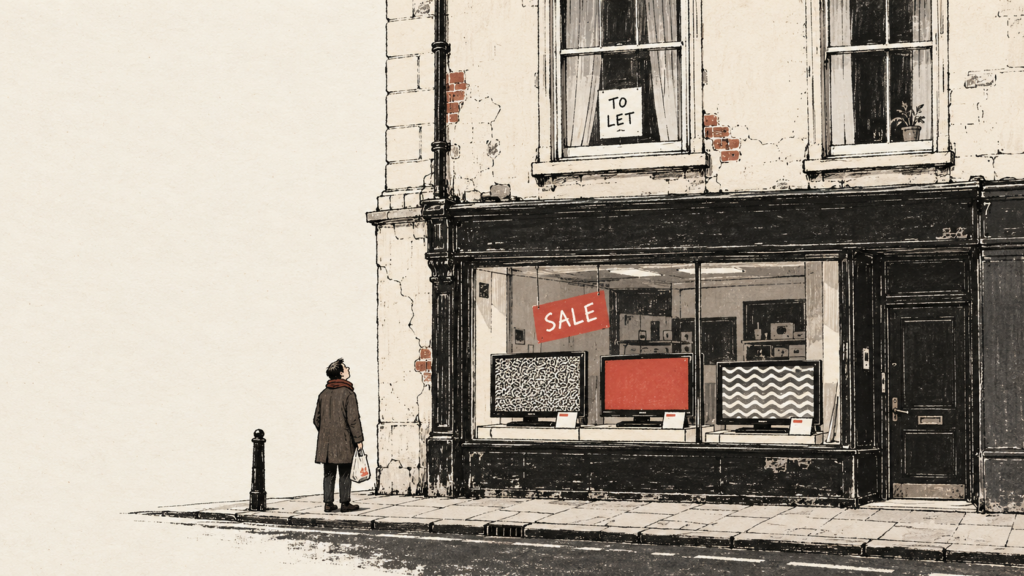
A better television is a poor consolation prize for a home you cannot afford.
That helps explain the “consumer sentiment anomaly”: economic indicators improve, yet people remain unhappy. Technological progress delivers wonderful products while housing, childcare and financial security remain out of reach. A household can acquire better possessions while losing confidence in its future.
The savings also have different scales. A television that becomes €300 cheaper saves you money once. Rent that rises €300 costs you again every month.
Then there is inflation’s unfinished damage. A falling inflation rate leaves earlier price increases embedded in the bill. Households remember what their groceries, rent and savings used to buy. Even when wages eventually catch up, depleted reserves and postponed plans can remain.
Borrowing adds another squeeze. The price of a flat may barely change while higher interest rates make its monthly payment unaffordable. A 2024 American study found that incorporating homeownership and financing costs explained much of the gap between predicted and actual consumer sentiment.
These pressures travel well. Europe’s recent housing and living-cost protests reflect frustration with the affordability of ordinary life. Brazil offers another revealing combination: historically low unemployment alongside overdue payments affecting nearly three in ten families. Employment gains and financial strain can coexist.
People also pay for inflation in effort.
Workers may need uncomfortable negotiations or a job change simply to preserve their purchasing power. Research on these “conflict costs” explains why recovered wages can leave lasting dissatisfaction: defending your position consumed time, stress and energy. A promotion expected to improve your life may merely cover the increased bills.
Anger deepens when officials announce success without acknowledging those sacrifices. Repeated shocks make reassurance harder to believe. ECB research finds that memories of earlier inflation and geopolitical crises shape households’ reactions to fresh disturbances. People learn to expect another setback.
Looking into 2027–28, I expect confidence to recover unevenly. Renters, prospective buyers and heavily indebted households may need sustained improvements before feeling secure. Further energy or financing shocks could quickly revive anger. Governments remain vulnerable wherever national progress leaves little additional room in household budgets.
Improvement is possible. Earnings can outpace essential expenses, debt burdens can shrink and more housing and childcare can become available. Those changes would make recovery tangible.
People need enough money left after the bills—and enough confidence in tomorrow—to make plans again.
About Author
